
You've probably seen "COPPA compliant" on apps and websites. Maybe you've skipped past it, assuming it's just legal jargon.
But if your child is online, COPPA compliance actually matters. A lot.
Here's what it means, why it exists, and what you should look for when choosing platforms for your kids.
What Is COPPA?
COPPA stands for the Children's Online Privacy Protection Act. It's a federal law passed in 1998 (updated in 2013) that protects kids under 13 from having their personal information collected and sold online.
In simple terms: websites and apps can't collect data from children without parental consent.
What COPPA Actually Protects
COPPA limits what companies can collect from kids, including:
If a platform is COPPA compliant, it means they've agreed not to collect this information from children—or if they do, they must get verifiable parental consent first.
Why This Matters for Your Child
Many "free" apps and websites make money by tracking user behavior and selling that data to advertisers.
When your child uses these platforms, companies are watching:
That data gets sold. Then your child sees targeted ads designed specifically for them.
COPPA compliance stops that. It means the platform can't track, collect, or monetize your child's behavior.
How to Know If a Platform Is COPPA Compliant
Look for these signs:
If a platform doesn't mention COPPA or privacy protections, assume they're collecting data.
COPPA Compliant Doesn't Always Mean Safe
Here's the catch: COPPA compliance is the minimum, not the maximum.
A platform can be COPPA compliant and still show ads (as long as they're not targeted). It can still use algorithms to recommend content. It can still prioritize engagement over education.
That's why Kid-Safe Learning goes further. COPPA compliance is the foundation, but true safety means:
What to Ask Before Signing Up
Before you let your child use any platform, ask:
If you can't find clear answers, that's your answer.
The Bottom Line
COPPA compliance means your child's data is protected by law. That's important.
But protection is just the starting point. Real Kid-Safe Learning means no tracking, no ads, and content that's intentionally curated—not algorithmically recommended.
At Kid's Portal, COPPA compliance isn't a checkbox. It's the foundation of everything we build.
Because your child's privacy isn't negotiable.
Looking for a COPPA-compliant educational app for your kids?
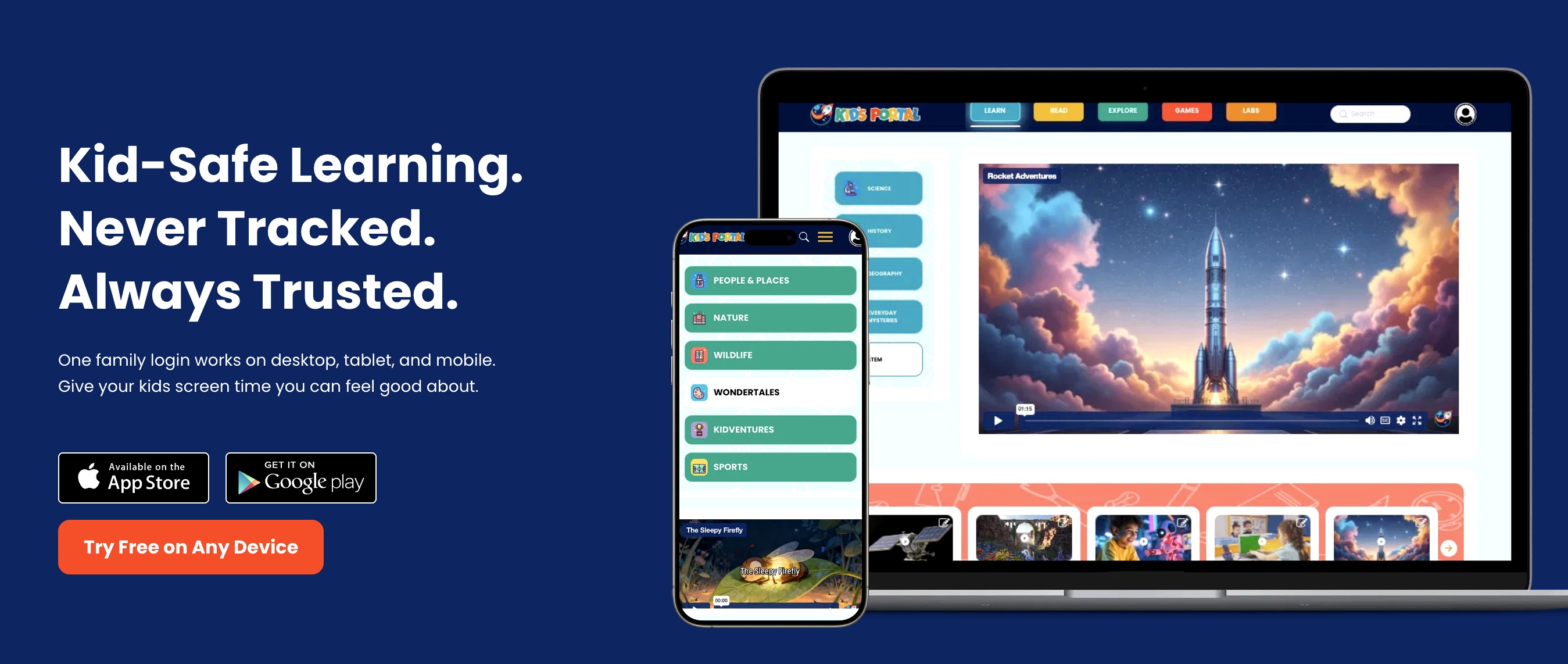
Kid's Portal is 100% COPPA compliant with zero ads, zero tracking, and zero data collection. Educational videos, games, interactive stories, and printables for kids ages 5-10—all in one safe subscription.
Try it free for 3 days → kidsportal.co