
Why Australia banned kids under 16 from social media and what it reveals about the digital world children are growing up in.
In November 2024, Australia passed the Online Safety Amendment Act, and on December 10, 2025, it officially took effect. The law bans children under 16 from accessing social media platforms.
It’s the first national law of its kind in the world.
Think about what that means for a moment.
An entire government had to step in because the tech industry wouldn’t police itself.
That says everything.
For years, social media companies promised they would improve safety for young users. They talked about parental tools, content moderation, and better protections.
But the problems kept getting worse.
Eventually, Australia decided voluntary promises weren’t enough.
They made it law.
Why Did Australia Create the Ban?
The decision wasn’t sudden. It was the result of years of mounting evidence showing how social media was affecting children.
Several issues kept appearing again and again.
The Mental Health Crisis
Researchers began linking heavy social media use in children to rising rates of anxiety, depression, and loneliness.
Australian health authorities saw these numbers climbing steadily in adolescents, particularly among girls.
Constant comparison, algorithm-driven content, and the pressure of online validation created an environment many young users struggled to navigate.
Sleep Disruption
Kids were losing significant sleep to late-night scrolling.
Phones in bedrooms, endless feeds, and constant notifications meant many children were awake far later than their bodies needed.
Chronic sleep deprivation in children doesn’t just cause tired mornings. It affects learning, mood, emotional regulation, and long-term development.
Cyberbullying That Never Ends
Social platforms turned bullying into something that never stops.
Unlike schoolyard bullying, online harassment follows kids home, into their bedrooms, and onto every device they own.
Several high-profile cases in Australia involving teen suicide were directly tied to online harassment.
For many families, there was no way to turn it off.
Predatory Contact
Open messaging systems and comment features exposed children to adults with harmful intentions.
While platforms provided reporting tools, parents and regulators repeatedly found that responses were slow and inconsistent.
Children were left navigating situations they were not developmentally prepared to handle.
Harmful Algorithmic Content
The recommendation algorithms powering social media are built for engagement, not wellbeing.
The system doesn’t distinguish between healthy curiosity and unhealthy fixation.
Children were increasingly shown content related to extreme dieting, self-harm, violence, and other harmful topics simply because the algorithm detected interest.
Advertising and Manipulation
Many platforms also collect behavioral data on young users.
This allows them to target advertising with precision, including ads tied to body image, gambling-style mobile games, and constant consumer messaging.
Children were effectively being profiled before they were old enough to understand it.
The Tipping Point
For years, platforms promised they would address these problems.
But the evidence kept mounting, and the improvements never came fast enough.
Australia reached a conclusion many parents had already come to themselves:
Voluntary compliance from social media companies was never going to be enough.
So they made it law.
What This Means Beyond Social Media
Australia’s law targets social media specifically.
But the underlying concern extends to any digital environment where children are exposed to algorithms built for engagement, advertising systems that profile young users, and content with limited oversight.
That includes many apps marketed directly to families.
The “kids” label doesn’t automatically mean safe.
Parents increasingly have to look deeper: how is content delivered, are ads involved, is data being collected, and who decides what a child sees next?
The conversation around kids and digital safety is only beginning. Governments are starting to act. But parents make the daily decisions.
A Different Approach
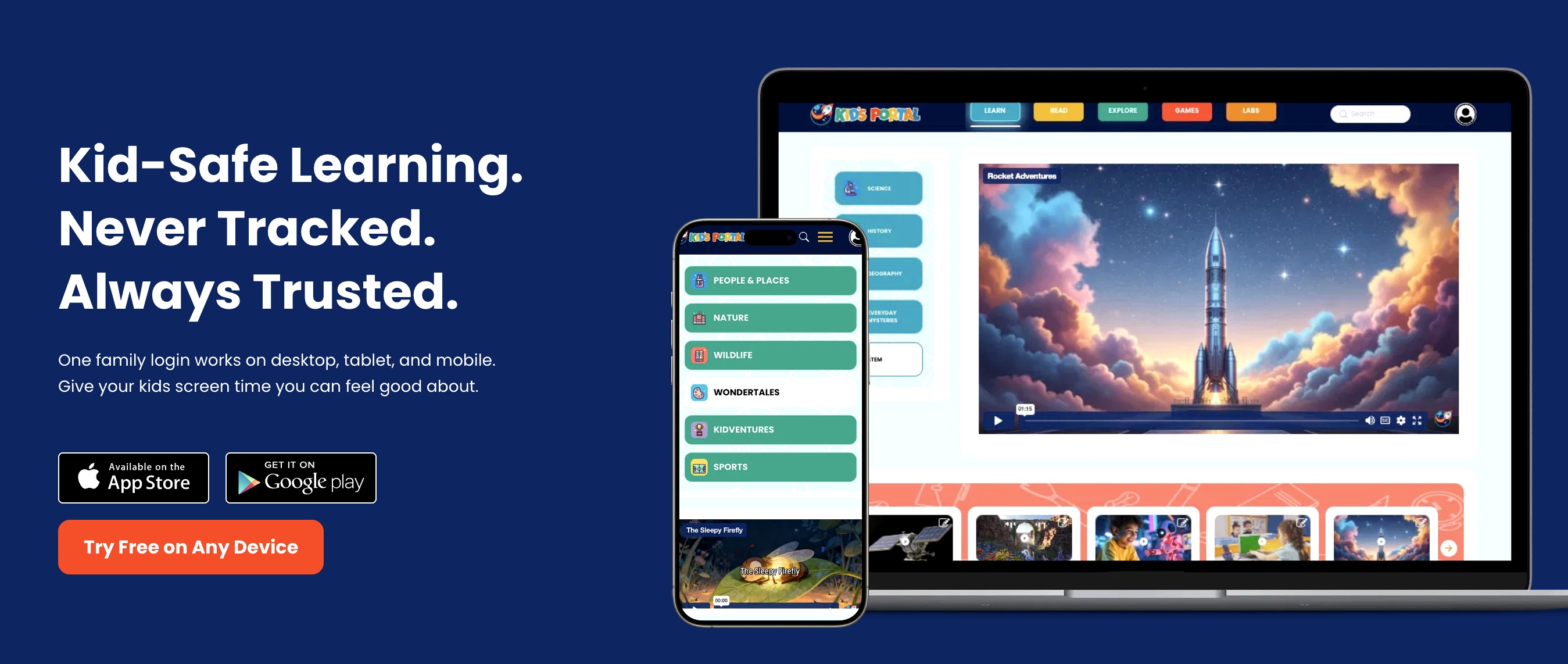
At Kid’s Portal, we believe children deserve a safer digital environment, one built around learning, curiosity, and exploration rather than engagement metrics.
Kid’s Portal offers educational videos, games, interactive stories, and printable activities for kids ages 5–10 in a completely ad-free environment with no tracking and no algorithm-driven feeds.
Just thoughtful content designed to help kids learn and explore.
Try Kid’s Portal free for 3 days at kidsportal.co.
Also available on the Apple App Store and Google Play.